Many gamers wonder where the mysterious Solomonar class in the upcoming Ordo Draconis game comes from.
The answer lies in the solomonar legend, a Romanian tradition of storm‑summoning wizards whose lore we explore in detail.
What is the solomonar legend in Romanian folklore?
The solomonar, sometimes called a “storm wizard,” is a figure rooted in the mountain cultures of the Carpathian region. Oral traditions describe these men as secretive practitioners who could summon, divert, or calm the weather at will. Their name derives from the biblical King Solomon, reflecting a belief that they possessed a hidden, almost divine knowledge of natural forces.
Origins in the Carpathians
Historical accounts from the 16th and 17th centuries mention solitary wanderers living in isolated high‑altitude villages, often near shepherd routes. These individuals were said to have learned their craft from an ancient lineage of “weather‑talkers” who guarded the peaks. The rugged terrain of the Carpathians provided both the isolation needed for secret rites and the dramatic weather patterns that reinforced the myth.
Core belief: command of the elements
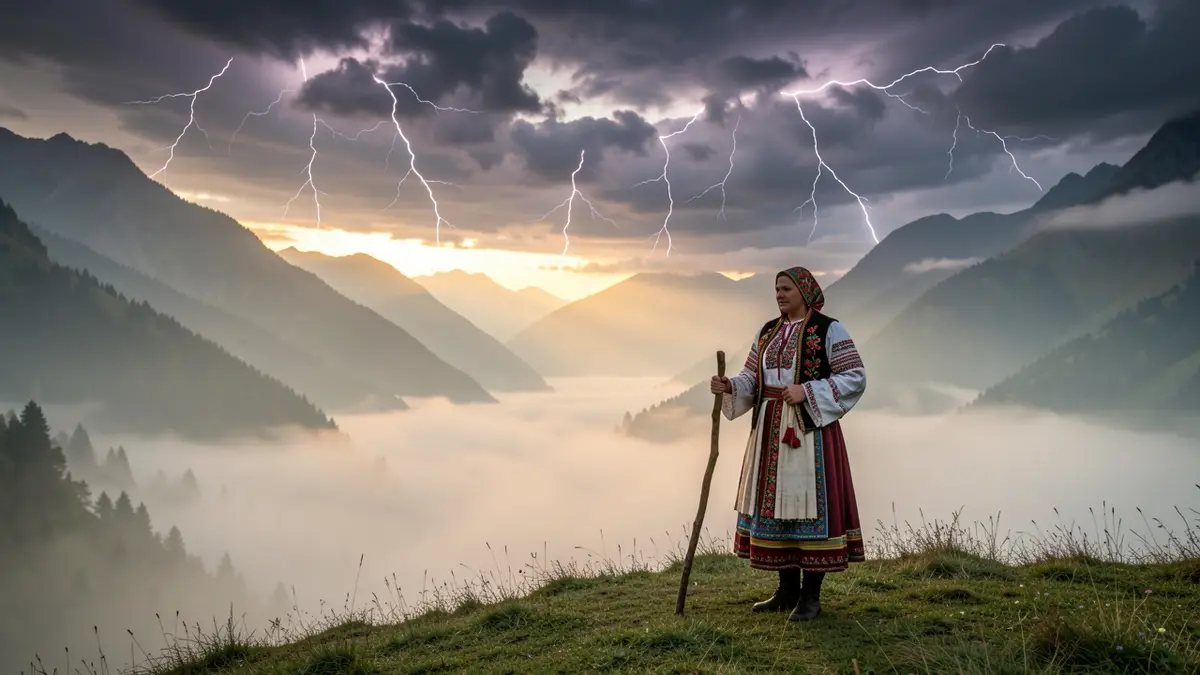
Central to the solomonar legend is the ability to control wind, rain, and storms. Stories recount solomonari riding on clouds, striking lightning with a wooden staff, or dispersing fog to guide travelers. Their power was thought to stem from a pact with elemental spirits, sealed by a ritual involving a special wooden wand, a blacksmith’s iron, and a piece of the solomonar’s own hair. Failure to respect the pact could bring a reversal of the magic, causing the wizard to be struck by the very storm he summoned.
Folklorists note that the solomonar’s weather‑control motif mirrors older pagan practices where shepherds invoked rain gods to protect flocks. Over time, the figure merged with Christian symbolism, portraying the solomonar as a borderline saint‑like protector who could either bless a harvest or unleash a punitive tempest.
Link to the Ordo Draconis project
The mythic attributes of the solomonar directly inspired the Ordo Draconis game class. By translating the legend’s weather‑shaping abilities into gameplay mechanics, the developers created a spell‑casting archetype that feels authentic to Romanian folklore while fitting the broader fantasy setting of the novel and the upcoming RPG.
Historical sources and cultural background of the solomonari
Earliest written accounts
The first known description of the solomonari appears in the 16th‑century chronicles of Moldavian monk Grigore Ureche, who recorded a “storm‑maker” accused of riding the wind over the Carpathians. A later 18th‑century ethnographic report by the Austrian traveler Johann Georg von Hahn expands the narrative, noting that the figure was called “solomonar” and that he could summon thunder with a wooden staff. Both sources emphasize the solitary nature of the practitioner and the fear he inspired among peasants.
Blend of Orthodox Christianity and pre‑Christian rites
Romanian folklore often fuses the liturgical calendar with older pagan customs. The solomonar is described as a monk‑like figure who recites Orthodox prayers while holding a ritual wand carved from oak, a tree sacred to the Dacian ancestors. The prayers are intended to “command the angels of the sky,” yet the wand is inscribed with symbols derived from ancient Slavic runes. This hybrid practice allowed the solomonar to operate within the church’s moral framework while preserving a covert knowledge of weather‑magic.
Scholars such as Mircea Eliade have argued that the solomonar’s dual identity reflects a broader pattern in Romanian spirituality: the coexistence of canonical religion and a hidden “world‑of‑the‑spirit” that survived in mountain villages. The ritual often began at dusk, when the sun’s last rays were believed to open a portal for the “wind spirits” to be summoned.
Survival in rural storytelling
Even after the 19th‑century national reforms, the solomonar remained a staple of oral tradition. Storytellers in Transylvania and Moldavia would recount how a solomonar could calm a destructive storm that threatened a harvest, or conversely, how a vengeful solomonar could unleash a hail of fire on a village that denied him hospitality. These tales were passed down at communal gatherings, especially during the “Sânziene” festival, when the boundary between the natural and supernatural was thought to be thin.
The persistence of the legend is evident in contemporary folk songs that still mention the “master of the winds.” Researchers have recorded variations of the narrative in the 1970s, noting that the core motifs—wooden staff, prayer, and a pact with the sky—remain unchanged. This continuity provides a rich cultural substrate for modern reinterpretations, such as the class design in Ordo Draconis, where the solomonar is placed within a 15th‑century setting that mirrors the novel’s historical backdrop.
Tip: When referencing the solomonar in a game or story, cite both the early chroniclers (Ureche, Hahn) and the later ethnographic collections to give the character a credible historical anchor.
Key rituals and symbols used by the solomonari
The wooden staff
The wooden staff is the most recognizable solomonar implement. Folklore describes it as a long, knotted branch carved with runic motifs that controls the wind and summons storms. In Carpathron Studio the staff is modeled as a 3‑D asset attached to the Solomonar’s hand, and the animation system uses it as the origin point for particle effects that represent gusts and lightning. When the player activates the “Tempest Strike” ability, the engine checks that the staff model is equipped; the spell then emits a cone of wind‑blown debris, matching the traditional description of the solomonar directing the elements.
The black hat
Traditional accounts note a wide, black felt hat with a single feather, symbolising the solomonar’s connection to night skies. The game class includes this hat as part of the default armor set. Its texture features subtle embroidered sigils that glow faintly when the character casts a holy‑water spell, providing visual feedback that the hat is not merely cosmetic but a conduit for magical energy.
The magic book
Solomonari are said to keep a leather‑bound book of incantations, often written in a mixture of Romanian and ancient scripts. In the class design, the book appears as a carryable item that can be opened in the UI to reveal a list of learned spells. Each entry shows a short description and a mana cost, mirroring the folklore idea that the solomonar must consult the tome before invoking a powerful rite. The book also triggers a “knowledge” buff, increasing the character’s spell‑casting speed for a limited time, which reflects the belief that the written word amplifies the wizard’s authority.
Holy water and icons
Rituals frequently involve sprinkling holy water or placing icons of saints on the ground to protect against malevolent forces. The game implements this through a “Sanctify Ground” skill. When activated, the Solomonar drops a small vial that releases a sparkling water effect and temporarily raises the defense of nearby allies. Icons are rendered as small, glowing plaques that can be placed on strategic locations; they act as waypoints for the AI to prioritize defensive positioning, echoing the protective function described in the legends.
Integration of symbols in gameplay
All four elements are tied together by the class’s resource system. The staff provides the base attack, the hat enhances wind‑related spells, the book unlocks new incantations, and holy water offers defensive utilities. This layered approach ensures that players experience the full ritual cycle: preparation (equipping the hat and staff), invocation (opening the book), and protection (using holy water or icons). The design deliberately mirrors the historic narrative, allowing the Solomonar to feel both a folkloric figure and a functional RPG archetype.
How the solomonar class was built for Ordo Draconis
Concept phase with the storytelling team
The narrative team at Qubitpage first gathered the core motifs from the solomonar legend: weather manipulation, secret glyphs and the iconic wooden staff. They drafted a short design brief that listed the essential powers – summoning storms, creating protective fog and channeling lightning through a staff. The brief also noted the folklore rule that a solomonar must never betray the natural order, which shaped the class’s alignment constraints.
During a workshop the writers consulted the novel “Ordo Draconis: The Unlit” to ensure the class fit the broader story arc. They identified the period‑specific settings (15th‑century Europe) and matched the solomonar’s travel routes with the protagonist Vlad’s journey from Edirne to Rome. This alignment guaranteed that the class would feel native to the game’s historical fantasy world.
Asset creation with Carpathron Studio
Once the mechanics were defined, the art team used Carpathron Studio to generate the visual library. The software’s AI video model rendered a series of short clips showing a staff crackling with electricity, clouds swirling over a medieval battlefield, and the solomonar chanting ancient runes. Local models (Wan 2.2 and Ovi 1.1) ran on an RTX 5060 8 GB card, producing high‑resolution textures that were later imported into the game engine.
Because Carpathron Studio can re‑render individual shots, the team refined each animation until the staff’s motion matched the traditional “whipping” gesture described in folklore sources. The Whisper speech checker verified that the voice‑over lines – “Vântul ascultă” and “Fulgerul se naște” – matched the recorded Romanian pronunciations, ensuring linguistic authenticity.
Mechanics implementation and balancing
The programming team translated the design brief into three core abilities: Stormcall (area‑wide lightning strike), Mist Veil (temporary invisibility for allies) and Tempest Shield (damage reduction tied to wind speed). Each ability consumes Energy, reflecting the solomonar’s reliance on inner vitality. The growth system mirrors the MU Online‑style point allocation, allowing players to invest Energy points to increase spell potency while keeping Strength and Agility balanced for melee support.
Playtesting revealed that the lightning strike could dominate early encounters, so the team added a cooldown that scales with the character’s Vitality. This adjustment respects the folklore caution that a solomonar’s power must be tempered by personal discipline.
Integration of lore assets
All reference pictures of traditional solomonar attire – black cloaks, iron‑bound boots and the wooden staff – were stored in Carpathron Studio’s library and linked to the class’s character model. The “Next episode” feature of the app ensured that the same visual assets persisted across multiple chapters, maintaining consistency as the story progressed from Nuremberg to Wallachia.
Finally, the exported MP4 clips were converted to WebM for in‑game cutscenes, and subtitles were added in English, Romanian and Italian to reach a broader audience. The result is a class that feels both mechanically sound and deeply rooted in Romanian folklore.
Tip: When tweaking the solomonar’s cooldown, reference the Whisper‑checked dialogue timing – shorter spoken lines naturally allow tighter ability intervals without breaking immersion.
Create a solomonar‑style spell in the game – step by step
Below is a concise guide for players who have chosen the Solomonar class and want to unlock the signature storm spell. The spell requires a specific set of items that can be found or crafted during regular gameplay. Follow each step in order to avoid missing a prerequisite.
- Select the Solomonar class. From the character creation screen choose “Solomonar” and confirm the gender you prefer. The class appears with a staff icon and the “Storm Mastery” badge.
- Reach level 12. Storm Mastery unlocks at level 12, so complete quests or defeat monsters that grant experience points. Check the experience bar in the HUD to ensure you have enough points before proceeding.
- Collect the three core components. You need a Thunder Crystal (dropped by the “Tempest Wraith” in the Carpathian forest), a Wind Feather (found in nests of the “Gale Harpy” near the Danube cliffs), and a Ancient Rune Tablet (reward for the “Lost Library” side quest). Each item is unique; the game marks them with a glowing outline when you approach.
- Activate the spell slot. Open the skill tree, locate “Signature Storm” under the “Elemental Assault” branch, and assign it to an active hotkey. The game will prompt you to confirm the use of the Storm Core; accept to finalize the activation.
- Practice the casting sequence. In a safe area, press the assigned hotkey, then quickly press the “Shift” key followed by the “Right Mouse Button”. This three‑step input triggers the visual storm effect and consumes the Storm Core.
- Upgrade the spell (optional). If you have collected a Storm Amplifier (dropped by the “Thunder Dragon” boss), return to the skill tree and select “Enhanced Storm”. The upgrade reduces cooldown by 20 % and adds a secondary lightning strike.
- Use the spell in combat. Position your character facing the enemy, activate the hotkey sequence, and watch the storm sweep across the battlefield. The spell deals area‑of‑effect damage and briefly stuns foes within a 5‑meter radius.
For visual references of the Storm Core and the casting animation, see the asset library generated with Carpathron Studio. If you encounter any issues, contact the support team via the Contact page.
Solomonar legend vs. other Romanian magical figures – quick comparison
The solomonar occupies a distinct niche in Romanian myth: a weather‑wizard who rides the wind and commands storms. In contrast, the strigoi is a revenant that feeds on life force, the vâjvâj is a forest spirit that lures travelers with eerie sounds, and the căpcăun is a monstrous ogre that kidnaps children. Below is a concise side‑by‑side view of their traditional powers, their role in folklore, and how each is rendered in the Ordo Draconis prototype.
| Figure | Typical Powers | Folklore Role | Game Representation |
|---|---|---|---|
| Solomonar | Control of wind and rain; ability to summon lightning; rides a magical horse or broom; uses secret incantations written in the “Book of the Sky”. | Benefactor or threat depending on pact; protects villages from drought or unleashes storms on enemies; often depicted as a learned wanderer. | Playable class “Solomonar” with staff‑based spells, a “Stormcall” active ability, and a passive that reduces fire damage. Visual effects built with Carpathron Studio assets. |
| Strigoi | Necromantic abilities, shape‑shifting, draining blood or life energy, invisibility at night. | Malevolent undead that haunts cemeteries and rural homes; feared as a cause of sudden illness or misfortune. | Enemy type that appears in night‑time encounters; attacks with life‑drain and can resurrect once per battle. |
| Vâjvâj | Illusory sounds, disorientation, ability to mimic voices, minor illusionary cloaking. | Forest guardian that tests travelers; sometimes aids those who respect the woods, punishes the disrespectful. | Neutral NPC that triggers a “Whisper” puzzle; successful negotiation grants a temporary “Silence” buff. |
| Căpcăun | Superhuman strength, regenerative flesh, ability to crush obstacles, occasional fire breath. | Brutal ogre that raids villages, kidnaps children, and serves as a cautionary figure for misbehaving youth. | Boss enemy with multi‑phase melee attacks; drops “Ogre Hide” armor piece that raises vitality. |
While the solomonar’s powers revolve around atmospheric manipulation, the other figures focus on death, illusion, or brute force. Folklore assigns the solomonar a conditional moral alignment—he can be a protector if respected—whereas strigoi, vâjvâj, and căpcăun are generally antagonistic. In the game, this nuance translates into a playable class with both offensive and defensive utilities, while the remaining entities appear solely as adversaries or environmental challenges.
Understanding these contrasts helps designers keep each mythic archetype distinct, preventing overlap of abilities and preserving the cultural texture that inspired the project.
Frequently asked questions
Who were the solomonari in Romanian history?
The solomonari are a folkloric figure rather than a documented historical group, appearing in Romanian oral tradition as weather‑controlling wizards. Stories describe them as learned individuals who could summon storms, calm winds, or bring rain to aid crops, often traveling in secret societies. Their reputation blends pagan practices with later Christian influences, and they are sometimes linked to itinerant craftsmen or healers who possessed esoteric knowledge of natural forces.
What powers are attributed to solomonari in folklore?
Folklore credits solomonari with the ability to command the sky, creating thunderstorm clouds, directing lightning, and dispersing fog at will. They are said to ride the wind on a magical broom or a horse made of fire, and to protect villages by diverting destructive weather toward enemies. In addition to meteorological control, legends attribute to them the skill to heal illnesses caused by bad air and to read the future through the patterns of clouds.
How accurate is the Ordo Draconis Solomonar class to the legend?
The Ordo Draconis class captures the core idea of a spell‑casting wizard who manipulates the elements, echoing the solomonari’s weather‑shaping reputation. It translates the mythic abilities into gameplay mechanics such as staff‑based spells that summon wind gusts, rain, or lightning, while preserving the narrative of a secretive order. However, the game limits the class to the three core attributes (Strength, Agility, Vitality, Energy) and does not model the full range of folkloric rituals described in Romanian tales.
Can the solomonar class be played on all platforms?
At present the Ordo Draconis game is planned for Windows first, with later releases intended for Linux, macOS, Android, and iPhone. Consequently, the solomonar class can be played on Windows immediately, while availability on the other platforms will depend on the future release schedule. The development team has not announced a specific timeline for those additional platforms.
Where can I learn more about Romanian folk magic?
In‑depth information about Romanian folk magic, including the solomonari, can be found in academic publications on Eastern European folklore and in collections of oral histories from the Carpathian region. Universities with Slavic or Balkan studies programs often host archives and translate primary sources. Online, reputable cultural heritage sites and libraries provide digitized manuscripts and scholarly articles that explore the rituals, symbols, and historical context of Romanian magical traditions.
Wrapping up the solomonan legend
The Solomonar class blends staff combat with spellcasting, so players should prioritize Energy for mana regeneration while balancing Strength to keep melee attacks viable. Early quests that reward spell scrolls are ideal for testing elemental combos before committing to expensive gear upgrades. When a boss introduces a new resistance, switch to a different school of magic rather than over‑investing in a single element; the built‑in AI voice checks in Carpathron Studio can help you script dialogue that hints at hidden weaknesses.
Keep your character’s visual consistency by re‑using reference images for the Solomonar’s robes and staff across all shots; the “Next episode” feature in Carpathron Studio ensures continuity when you expand the story beyond the initial chapter. Finally, record your own voice lines for unique incantations and export the final cut as MP4 to share with fellow role‑players.
Ready to bring your own Solomonar saga to life? Explore the project details and join the community at the most relevant Qubitpage page.