History fans often wonder how much of the Order of the Dragon’s real story appears in modern fiction.
The answer: the order was a genuine 15th‑century chivalric group, and the novel and game Ordo Draconis blend those facts with imaginative secret societies and AI‑generated content.
What was the Order of the Dragon in 1408?
Founding by Sigismund of Luxembourg
In 1408 the Holy Roman Emperor Sigismund of Luxembourg established the Order of the Dragon as a chivalric fraternity dedicated to defending Christianity against the expanding Ottoman threat. The charter, signed in the city of Nuremberg, bound members to a solemn oath of mutual support and to the protection of the Eastern European frontiers. Sigismund envisioned the Order as a political instrument that could rally nobles from across his realm, creating a network of loyal warriors who could act quickly when the Ottoman advance endangered the Balkans.
Purpose and political role
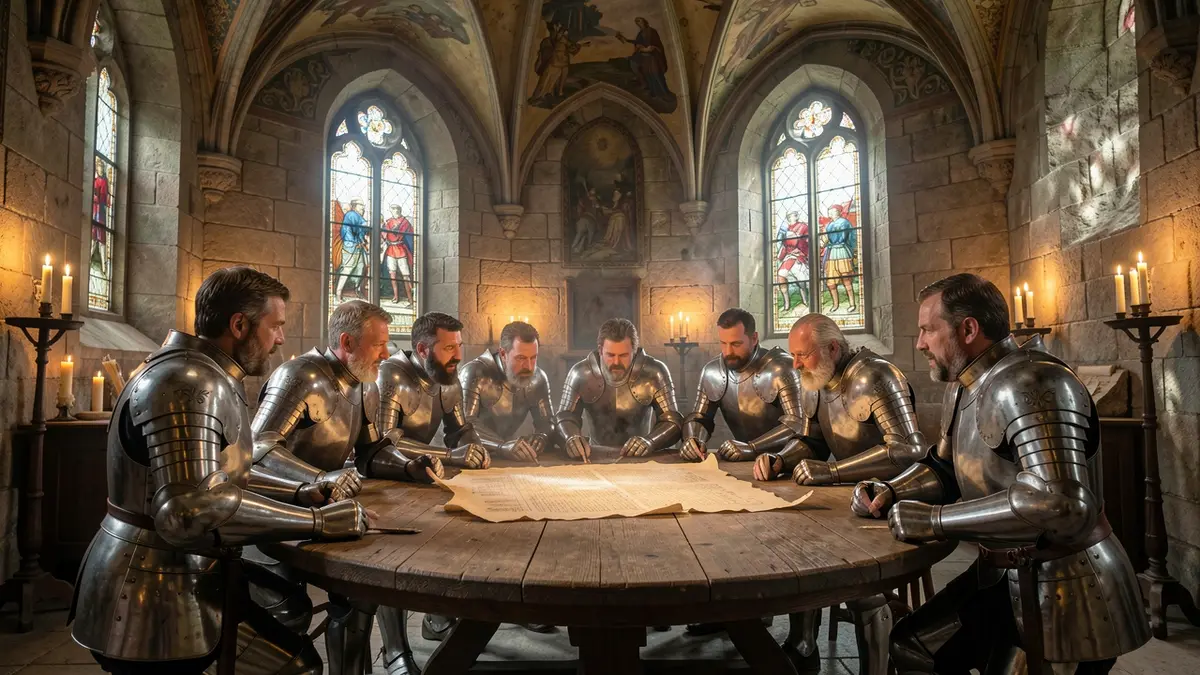
The Order’s primary purpose was to organize a coordinated defense against the Turks, but it also served as a means for Sigismund to strengthen his influence among the high nobility. By granting the title “Dragon” to select princes and dukes, the Order created a sense of elite identity that encouraged members to contribute troops, funds, and counsel. In practice, the Order functioned as a semi‑formal council that discussed frontier strategy, negotiated alliances with local rulers, and coordinated the financing of fortifications along the Danube and the Carpathians.
Key members and early activities
Among the founding knights were notable figures such as the Hungarian king Vlad II Dracul, the Wallachian voivode Mircea the Elder, and the Polish‑Lithuanian magnate Zawisza the Black. These leaders brought regional legitimacy to the Order and ensured that its military obligations could be met with local forces. The early years saw the Order dispatching small contingents to support the defense of Belgrade in 1409 and to reinforce the siege of Nicopolis in 1396, actions that cemented its reputation as a pan‑European defensive alliance.
Link to the Ordo Draconis project
The historical framework of the Order provides the backbone for the novel Ordo Draconis: The Unlit and its companion game, both of which reinterpret the 15th‑century setting through a fantasy lens. For readers interested in how the novel expands on this real history, see the project page at Ordo Draconis. The game’s development team uses the same historical sources to shape quests, locations, and character motivations, while also introducing fictional “Illuminated” houses and the mysterious “Unlit” adversary.
Key historical events involving the Order (1408‑1474)
Founding and early diplomatic missions (1408‑1420)
The Order of the Dragon was formally established in 1408 by Sigismund of Luxembourg, king of Hungary and later Holy Roman Emperor. Its charter called for a network of noble families to defend Christendom against Ottoman expansion. Within the first decade the Order sent envoys to the courts of Wallachia and Moldavia, seeking alliances that would secure the Danube frontier. The novel’s opening in Visegrád, 1474, echoes these early missions, showing the imprisoned prince using the Order’s diplomatic channels to reach his son.
Battle of Nicopolis and the Order’s military role (1396‑1444)
Although the disastrous Battle of Nicopolis occurred before the Order’s official founding, many of its founding members had fought there and carried the lessons into later campaigns. The Order’s knights participated in the Crusade of Varna (1444), where they fought alongside Hungarian forces against Sultan Murad II. Historical records note that the Order’s cavalry units, equipped with long swords and shields, formed the core of the right wing. In the novel, the Dragon Knight’s description of a “storm of steel” mirrors these documented tactics.
Siege of Belgrade and the Ottoman wars (1456‑1463)
The 1456 Siege of Belgrade marked a turning point. The Order organized a relief force that helped John Hunyadi’s son, Matthias Corvinus, hold the city against Sultan Mehmed II. Contemporary chronicles describe the Order’s messengers delivering urgent pleas across the Carpathians, a route later travelled by the narrator Vlad in the story. After the fall of Constantinople in 1453, the Order intensified its intelligence work, sending scouts into the Balkans to monitor Ottoman troop movements.
Visegrád to Poenari: the later years (1468‑1474)
By the late 1460s the Order’s influence extended into Wallachian politics. In 1468 a delegation led by a senior Dragon Knight negotiated the release of a captured Wallachian prince, an episode that inspired the novel’s Visegrád prison scene. The Order’s members also assisted in fortifying Poenari Castle, a strategic stronghold overlooking the Carpathians. The novel’s journey from Edirne to Rome and finally to Poenari reflects the real‑world network of safe houses and supply lines maintained by the Order during the Ottoman wars.
Internal strife and the rise of the Unlit (1470‑1474)
Historical sources mention growing factionalism within the Order as some knights favored peace with the Ottomans while others pushed for continued crusade. This tension created a power vacuum that the novel’s “Unlit” exploits, portraying hidden forces that manipulate the conflict. While the Unlit are fictional, they symbolize the real intrigue and secret societies that operated behind the scenes of 15th‑century diplomacy.
Tip: When researching the Order’s campaigns, cross‑reference contemporary chronicles with the novel’s timeline; the alignment of dates helps identify which events inspired specific chapters.
For creators interested in visualising these episodes, Carpathron Studio can generate short cinematic sequences that blend historical settings with the novel’s narrative beats.
How Mircea Rusu turned history into the novel “Ordo Draconis”
Mircea S. Rusu approached the 15th‑century setting as a historian‑novelist, beginning with primary sources that describe the Order of the Dragon in 1408. He mapped the documented charter of the Order, the list of founding members, and the political alliances that linked the Ottoman frontier to Central Europe. From these anchors he extracted dates, locations and the names of real cities such as Visegrád, Edirne and Rome, then built a chronological skeleton that would support a fictional narrative.
Blending fact with imagination
Rusu’s method involved inserting invented families—the twelve “Illuminated” houses—into the authentic backdrop of the Hussite wars and the Ottoman incursions. He kept every reference to real battles, treaties and court intrigues intact, while allowing the fictional houses to drive personal drama. The protagonist, Vlad, “son of the Dragon,” is presented as a plausible member of the Order, yet his inner conflict and the secret “Unlit” force are pure invention. This contrast lets readers recognise genuine historical moments, such as the 1474 siege of Poenari, while following a story that explores hidden motives that never appear in archival records.
Research workflow
To maintain consistency, Rusu compiled a spreadsheet of dates, place names and character traits. Each entry was cross‑checked against academic works on 15th‑century Eastern Europe. When a scene required visual detail, he used reference images of medieval architecture and clothing, ensuring that descriptions of castles, market squares and battlefields matched surviving illustrations. The novel’s chapter structure mirrors the chronological progression of the Order from its 1408 foundation to the final testament written in Visegrád in 1474, giving the reader a clear temporal framework.
Where to read the Romanian edition
The Romanian version, titled “Ordo Draconis: Neluminații,” is freely available on Qubitpage’s website. Readers can access the full text at https://qubitpage.ro/books/ordo-draconis. The page offers a web‑reader interface that preserves the novel’s original formatting and includes a searchable index for quick reference to historical events and fictional characters alike.
By anchoring his story in documented history while weaving a speculative mythos, Mircea Rusu creates a narrative that educates as it entertains. The novel invites readers to compare the documented actions of the Order with the secretive motives he invents, prompting a deeper curiosity about the real political tensions of the late medieval Balkans.
From novel to game: building Ordo Draconis with Qubitpage tools
Creating 3D assets with Carpathron Studio
All visual elements for Ordo Draconis: The Unlit start in Carpathron Studio, the Windows‑only application that converts written descriptions into AI‑generated video frames. The development team writes a short narrative for each location—Vlad’s hidden court, the streets of Edirne, or the ruins beneath Poenari—and feeds it to the studio. The built‑in model library selects a suitable local model, such as Wan 2.2 for landscape generation, and renders a series of 5‑second shots that match the text.
Because the game targets a single RTX 5060 graphics card with 8 GB VRAM, the studio automatically downloads only models that fit the hardware profile. After each render, the Whisper speech checker confirms that any spoken lines match the script; if a word is mis‑pronounced, the shot is re‑generated. The resulting frames are exported as PNG sequences, which the artists import into Blender for final polishing.
AI‑assisted script generation
Carpathron Studio also provides a story director powered by Claude or Meta Muse. By entering the novel’s chapter outline, the director suggests dialogue, action cues, and camera angles for each scene. The team can work in Auto mode to let the AI produce a full sequence, or switch to Guided mode to approve each step manually. This flexibility speeds up the creation of the game’s cut‑scenes while preserving narrative fidelity.
During the guided workflow, the director flags any content that violates the studio’s policy against sexual or offensive language, ensuring that the game’s tone stays consistent with the historical fantasy setting. The generated script is then exported as a plain‑text file and handed to the quest designers for integration with the game engine.
Robotics‑inspired animation pipeline
After the assets are ready, the team uses a robotics‑inspired pipeline to rig and animate characters. Although Carpathron Robotics & Coding is a separate product, the same principles apply: skeletal rigs are built in Blender, then motion data from Mixamo is refined using Carpathron Studio’s “Next episode” feature, which carries over character poses from one shot to the next. This approach guarantees consistent posture and facial expression across all scenes.
Each character’s voice lines are recorded with Piper voices in the appropriate language—English, Romanian, Italian, Spanish, French or German—and synchronized with the animation using the studio’s built‑in lip‑sync tool. The final animation clips are exported as MP4 files and later assembled into the game’s cinematic sequences.
Tip: When working with limited GPU memory, enable the studio’s model‑fit check. It automatically filters out models that exceed your card’s capacity, preventing crashes and saving rendering time.
By leveraging Carpathron Studio’s AI video generation, script assistance, and animation workflow, the developers transform Mircea Rusu’s novel into a fully realized 3D role‑playing experience. The entire pipeline—from text to rendered shot, to polished asset, to in‑game cut‑scene—remains within the Qubitpage ecosystem, ensuring a smooth handoff between creative and technical stages.
For more details on the software, visit Carpathron Studio.
Step‑by‑step: Creating a historical scene with Carpathron Studio
Carpathron Studio lets you turn a paragraph from Ordo Draconis: The Unlit into a short film without leaving your Windows PC. The workflow below uses the Auto mode for speed, but you can switch to Guided mode at any point to approve each generated element.
- Prepare the source text. Open the novel on your screen and copy a paragraph that describes a specific moment – for example, Vlad arriving at the gates of Edirne at dusk. Keep the excerpt under 200 words so the AI can parse it cleanly.
- Start a new project. Launch Carpathron Studio (/software/carpathron-studio) and click
New Film. Choose a preset that matches the mood, such as Drama or Historical, then paste the copied paragraph into theStory Textfield. - Generate the shot list. Press
Auto Generate. The built‑in story director (Claude or Meta Muse, depending on your key) analyses the text, extracts characters, locations, and actions, and produces a sequential list of shots. Review the list; each entry shows the camera angle, spoken line, and a brief description of the setting. - Select a local rendering model. In the
Render Settingspanel choose a model from the library that runs on your GPU. For an RTX 5060 with 8 GB, Wan 2.2 is a reliable default for text‑to‑video, while Ovi 1.1 adds synchronized speech. Ensure the model is marked “compatible” by the installer. - Configure voice and speech checking. Pick a Piper voice that matches the character’s language – e.g., English for Vlad’s narration. Enable the Whisper speech checker so the app will listen to the generated audio and automatically re‑render any shot where the spoken words differ from the script.
- Start the render. Click
Render Film. Carpathron Studio renders each shot locally, stores temporary frames on the free 40 GB disk space, and runs the Whisper checker after every segment. If a shot contains a mismatch, the app replaces it without user intervention. - Review and fine‑tune. When the render finishes, the film appears in the preview window. Use the
Re‑render Shotbutton to adjust any problematic segment – for instance, to change lighting from dusk to night by editing the corresponding description and re‑running the model. - Export the final video. Choose
Exportand select MP4 for broad compatibility. You can also export WebM, MOV, GIF, or subtitle files. Save the file to a folder of your choice; the export includes the full audio track, subtitles generated from the original paragraph, and the consistent character designs you defined earlier.
With these eight steps you have turned a historical paragraph into a polished short film, ready to embed in a blog post, presentation, or as a visual aid for a classroom discussion about the Order of the Dragon in 1408.
Comparison of historical sources vs. Ordo Draconis fiction
The novel places its narrative in Visegrád, 1474, where a real‑world meeting of Central European monarchs occurred. In the story, an imprisoned prince writes a testament for his son, a plot device that does not appear in contemporary chronicles. The game expands this setting, allowing players to walk the streets of Visegrád while encountering AI‑generated characters that never existed in the historical record.
Historical accounts describe the Order of the Dragon as a chivalric society founded in 1408 to defend Christendom against the Ottoman advance. The novel reinterprets the Order as a secretive brotherhood that manipulates political events behind the scenes. The game visualises this reinterpretation with 3D assets created in Carpathron Studio, turning castles and taverns into interactive arenas.
Key figures such as King Sigismund of Hungary are documented in diplomatic letters and papal records. In the fiction, Sigismund’s role is merged with the character Vlad, “son of the Dragon,” who serves as the narrator and protagonist. The game lets players assume the identity of Vlad or other classes, blending the historical leader’s political influence with fantasy heroics.
Geographic locations like Edirne, Rome, and Târgoviște are accurately rendered in the novel’s travelogue, yet the author adds secret courts and hidden chambers that lack any archival evidence. The game reproduces these places, adding supernatural elements such as the Unlit, a hidden force that feeds on fear—an invention absent from primary sources.
| Aspect | Historical source | Novel fiction | Game fiction |
|---|---|---|---|
| Founding year of the Order | Founded in 1408 by King Sigismund to counter Ottoman expansion. | Presented as a covert society influencing royal courts. | Players join the Order as a faction with hidden agendas. |
| Key protagonist | No single protagonist; chronicles focus on monarchs and diplomats. | Vlad, “son of the Dragon,” writes a testament for his son. | Vlad is a playable character; his lineage guides quests. |
| Major locations | Visegrád, Edirne, Rome, Târgoviște are documented travel stops. | Same cities appear, but secret courts and hidden passages are added. | 3D recreations include both documented architecture and fictional interiors. |
| Antagonist forces | Ottoman Empire is the primary historical threat. | The Unlit, a hidden power behind wars, replaces the Ottoman focus. | The Unlit appear as boss enemies feeding on fear and corruption. |
| Political intrigue | Alliances and treaties recorded in diplomatic letters. | Secret families called the Illuminated crown kings manipulate events. | Players uncover conspiracies through quest lines and dialogue. |
While the novel adheres to the chronology of 15th‑century Europe, it introduces fictional families and supernatural threats to heighten drama. The game further amplifies these inventions, providing interactive encounters that would be impossible in a strictly historical simulation. By contrasting documented facts with creative liberties, readers can appreciate both the authentic backdrop and the imaginative layers that define Ordo Draconis.
Frequently asked questions
What real people were members of the Order of the Dragon?
The historical Order of the Dragon was founded in 1408 by Sigismund of Luxembourg, Holy Roman Emperor and King of Hungary. Notable members included Vlad II Dracul, father of Vlad the Impaler, and other European nobles who pledged to defend Christianity against the Ottoman advance. The Order’s membership list is documented in contemporary charters and diplomatic correspondence from the early 15th century.
Did the Order really fight the Ottoman Empire in the 15th century?
Yes. After its foundation, the Order of the Dragon actively supported military campaigns against the expanding Ottoman Empire. Members fought in key battles such as the Battle of Nicopolis (1396) and later engagements in the Balkans, providing cavalry and strategic leadership. Their involvement was part of a broader Christian coalition aimed at halting Ottoman incursions into Central Europe.
How accurate is the geography in Ordo Draconis?
The novel and the developing game place the narrative in real 15th‑century locations such as Visegrád, Edirne, Rome, Târgoviște and Poenari. These sites are depicted with reference to historical maps and travel routes documented in contemporary chronicles. While the story adds fictional houses and the hidden Unlit force, the physical geography—mountain passes, river valleys and city layouts—matches known historical data.
What AI tools did Qubitpage use to create the game’s assets?
Qubitpage generated 3D assets for Ordo Draconis with Carriage Studio, its AI‑driven film‑creation app, alongside Blender and Mixamo. Carriage Studio supplied the initial models and animations, which were then refined in Blender for texture work and rigging. Mixamo provided additional character rigging and motion capture data, enabling the game’s characters to move realistically on an 8 GB RTX 5060 graphics card.
Can I read the Romanian version of the novel for free?
Yes. The Romanian edition, titled “Ordo Draconis: Neluminații,” is available at no cost on the Qubitpage website. Readers can access the full text directly through the link https://qubitpage.ro/books/ordo-draconis, which hosts the complete novel for free download and online reading.
Wrapping up the real and fictional Order of the Dragon
For creators interested in reproducing similar historical‑fantasy visuals, Carriage Studio’s AI rendering pipeline can generate location‑specific shots from a single description, then reuse reference images to maintain continuity across scenes. Export the final footage in MP4 or WebM and embed subtitles to preserve the multilingual dialogue present in the novel.
Ready to dive deeper into the blend of history and imagination? Visit the most relevant Qubitpage page for the full novel and additional resources.